

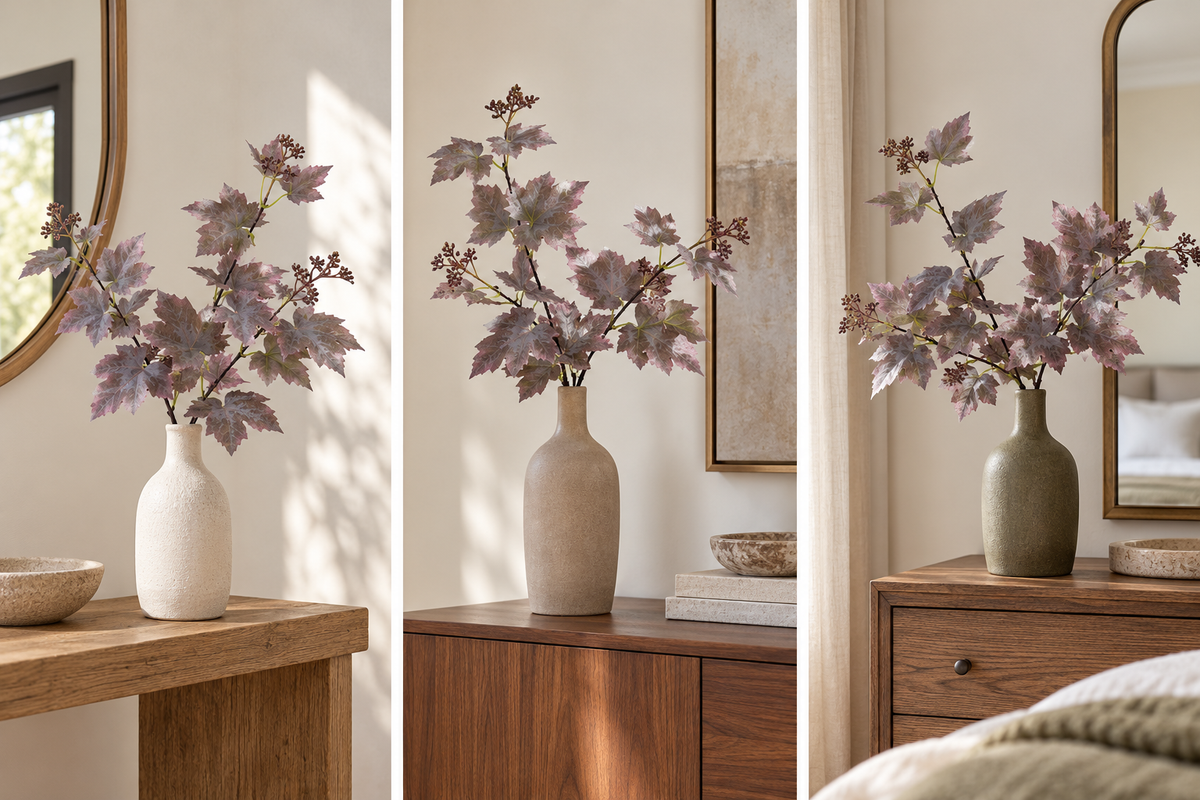
AI-assisted styling ideas inspired by FSS Dusty Mauve Brown maple foliage. Arrangement fullness, vessel size and scale are illustrative. Vases and styling props are not included.
Illustrated styling ideas: images are AI-assisted interpretations based on FSS product references. Vase sizes, arrangement fullness and scale are illustrative; see the product page for actual item photographs.
A little repeated color can make separate parts of a home feel connected. Mauve-brown leaves on an entryway table might echo a small display on the sideboard, with the same soft tones appearing again beside a bedroom mirror. The vases can be different; the foliage gives them something in common.
Our Dusty Mauve Brown artificial maple leaf stems come as six separate stems in one set. That gives you the choice of keeping them together or dividing them between vessels. Two stems in each of three vases is one starting plan to try. The right distribution depends on the openings, the space around them and how full you want each display to feel.

Begin with the six stems you receive
Lay out the stems separately before arranging them. Each is approximately 29.5 inches long, including the lower stem, so look for vessels that can support their height. The branching shape above the rim matters as much as the length hidden inside the vase.
The cloth leaves have dusty mauve and earthy brown shading with pale gray mottling. Let that weathered finish guide the palette: cream pottery, warm wood and a quiet background give the leaf shapes room to show. Compare the actual stems in your room's light before choosing nearby colors.

Choose the places before the vases
Start with three surfaces you already use: an entryway console, a sideboard and a roomy bedroom table or dresser. Decide where the vase can stand without taking over space needed for keys, serving pieces or everyday essentials.
Set the empty vessels in place and look from your normal viewing position. A narrow opening may help a few stems stay gathered; a broad opening can let them spread but may need suitable support. Check that each filled vessel is stable. If a surface or vase feels too small for the long branches, choose another location.
First corner: an open entryway outline
Try two stems in the entryway vase, with one slightly behind the other. Turn them so the leaf shapes overlap in places while leaving some open space between the branches. You do not need to make both sides identical.
The stems are bendable. Support each branch and adjust it gently, a little at a time, following the product's care notes. Step back before making another change. From the doorway, check that the foliage has a clear outline and leaves the table's useful surface accessible.
Second corner: a softer sideboard accent
Place another pair in the sideboard vessel. Let this arrangement respond to the objects already there: a taller branch might sit beside a low bowl, while an open side can leave room around a framed picture.
Look at the background as well as the vase. Foliage can disappear into a busy shelf or dark artwork; moving the vessel a little may make the leaves easier to appreciate. If the sideboard is used for serving, keep the stems clear of the working area or move the vase before setting out dishes.
Third corner: a quiet bedroom detail
Use the remaining pair where there is enough room for their spread, perhaps at one end of a dresser. A simple vessel can let the mauve-brown shading become the small connection to the other rooms.
Check access to drawers, mirrors, lamps and switches. Turn the branches away from a walkway, and give the vase a secure position. The aim is a detail you enjoy as you pass, with enough space around it for the room to remain comfortable to use.
Change the division when a vase needs more
Two stems per vessel is a starting point, not a rule. If one grouping looks sparse or will not sit securely, try three stems in each of two suitable vases. The same six-stem set can support a different plan without requiring a new purchase.
Count the stems in each finished arrangement before deciding whether you need more. A broader vase may call for more foliage than a narrow one, and you may prefer one generous grouping to several lighter accents. Let the vessels and your preferred shape settle that choice.
Keep the set useful beyond autumn
When the season changes, try the maple foliage beside ivory flowers or winter greenery you already own. You can change the surrounding objects and keep the leaves as a quieter part of the arrangement.
For routine care, lightly dust the cloth leaves with a soft, dry brush. Avoid soaking or harsh cleaners, and use the stems indoors as recommended. Keep artificial foliage away from heat and open flames.
Shop the maple set: Dusty Mauve Brown artificial maple leaf stems. Cart quantity 1 means one set of six stems; quantity 2 means two sets, or twelve stems. Vases, other flowers and styling accessories are not included.